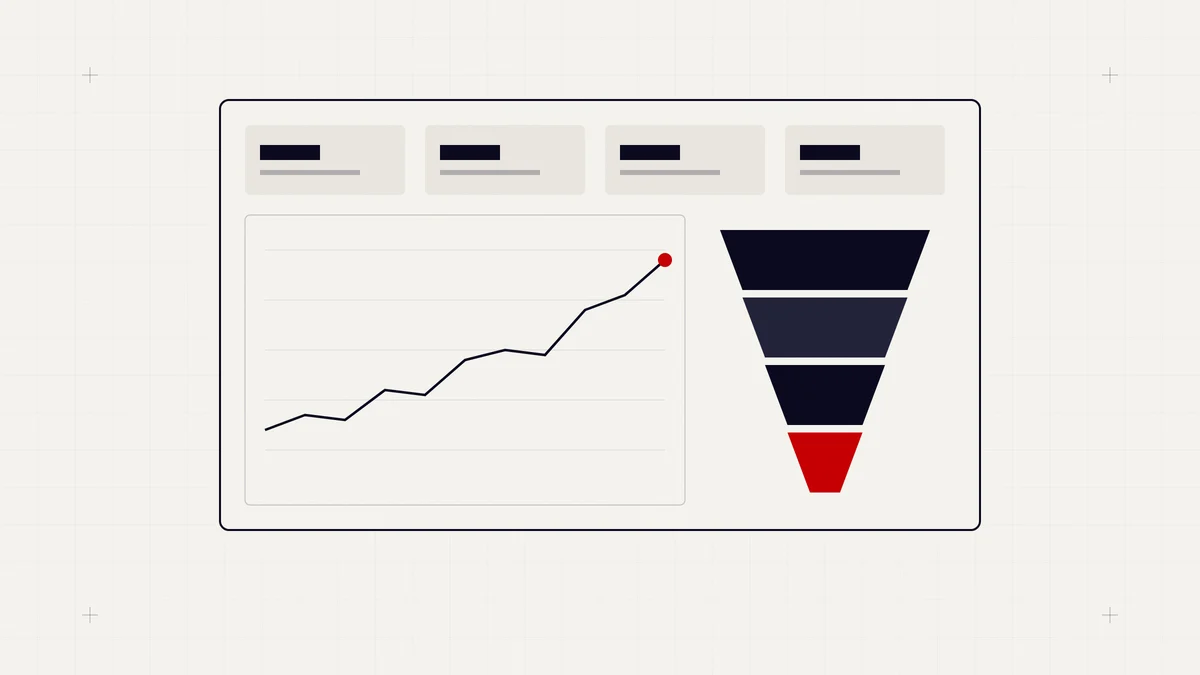
We can track:
- Website traffic
- Organic traffic
- Search visibility
- Leads
- Qualified leads
- Phone calls
- Form submissions
- Conversion rates
- Cost per lead
- Campaign performance
- Landing-page performance
- Lead sources
The better question
The question is not "how many people visited the website?" The better question is "which activities generated the right opportunities?"
What Is Analytics & CRO for Law Firms?
Analytics and conversion rate optimization, often shortened to CRO, is the discipline of measuring how your digital marketing actually performs and systematically improving how well your website and campaigns turn visitors into genuine enquiries.
Analytics answers the question of what's happening: how many visitors arrive, where they come from, which pages they view, and whether they take a meaningful action. CRO uses that information to answer a second question: how can more of those visitors be converted into actual clients.
For a law firm, this typically means tracking website traffic, form submissions, and phone calls, then identifying and addressing friction points that are quietly preventing interested visitors from actually making contact.
Without proper analytics and CRO, marketing decisions are effectively guesswork, budget and effort get allocated based on assumption rather than evidence of what's genuinely producing results.
Why Analytics & CRO Matter for Legal Services
Legal marketing often involves meaningful investment across multiple channels, SEO, paid search, content, and without proper tracking, it's impossible to know which of these channels is actually producing the enquiries that matter.
A significant share of legal enquiries happen by phone rather than through a website form, which means analytics setups that only track form submissions can dramatically understate a campaign's true performance.
Small improvements in conversion rate can have an outsized effect on business results, a website converting at three percent instead of two percent effectively increases the value of every marketing dollar already being spent, without requiring any additional budget.
Legal buyers often research extensively before making contact, meaning conversion barriers, confusing navigation, unclear next steps, slow load times, can quietly cost a firm enquiries from visitors who were genuinely interested but gave up along the way.
The Core Components of an Analytics & CRO Strategy
A complete analytics and CRO strategy is built from several interconnected components, each contributing to a clearer, more actionable picture of marketing performance.
Analytics implementation: properly configured website analytics, correctly tracking traffic sources, page performance, and user behavior across your site.
Call tracking: connecting phone enquiries back to the specific campaigns, pages, and keywords that generated them, closing a critical gap left by web-only analytics.
Conversion tracking: accurately identifying and measuring genuine conversions, form submissions, calls, and other meaningful actions, distinct from simple page views.
Funnel analysis: understanding the path visitors take from initial arrival to conversion, identifying where interested visitors are dropping off along the way.
A/B testing: systematically testing variations of pages, forms, or calls to action to identify what genuinely improves conversion performance, rather than relying on assumption or opinion.
Reporting and dashboards: clear, ongoing visibility into performance, structured around the metrics that actually reflect business impact rather than vanity numbers.
How We Approach Analytics & CRO
We apply the same six-stage framework — diagnose, position, build, acquire, optimize, scale — to analytics and CRO specifically.
Diagnose: we audit your current analytics setup, if any, identifying gaps in tracking accuracy and reviewing existing conversion data to understand where visitors are currently dropping off.
Position: we identify which pages and conversion points represent the strongest opportunity for improvement, based on traffic volume and current performance gaps.
Build: we implement or correct analytics and call tracking, ensuring accurate data capture, and begin structured testing on priority pages and conversion points.
Acquire: as tracking data accumulates, we build a genuinely reliable picture of what's driving conversions and what isn't, across channels and pages.
Optimize: we run structured tests and implement changes based on real data, continuously refining pages and funnels toward stronger conversion performance.
Scale: once specific improvements are proven effective, we look at applying similar principles across additional pages or channels where relevant.
Common Analytics & CRO Mistakes We See
Relying solely on website form tracking while ignoring phone calls, which can dramatically understate true campaign performance for a law firm where many enquiries arrive by phone.
Never actually reviewing analytics data after initial setup, leaving valuable insight sitting unused in a dashboard nobody checks regularly.
Making significant website or campaign changes based on assumption or personal opinion rather than actual behavioral data or structured testing.
Tracking vanity metrics, like raw traffic or pageviews, as the primary measure of success, rather than metrics that reflect genuine business impact.
Implementing analytics incorrectly from the start, leading to inaccurate data that quietly undermines every decision made based on it afterward.
Treating conversion rate optimization as a one-time project rather than an ongoing, iterative discipline of continuous testing and refinement.
Analytics & CRO Across Different Practice Areas
Practice areas with high-urgency search intent, like criminal law, often benefit most from CRO focused on speed and immediacy, ensuring a phone number or call button is genuinely impossible to miss.
Corporate and commercial law conversion paths often involve more research and consideration, meaning CRO here may focus more on providing genuinely comprehensive information before asking for contact.
Family law conversion optimization often benefits from a particular focus on reducing anxiety in the contact process, clear reassurance about confidentiality and next steps at the point of conversion.
We tailor conversion analysis and optimization priorities to how your specific practice areas' clients actually behave, rather than applying identical assumptions across every service.
Call Tracking: Why It's Essential for Law Firms
Call tracking assigns unique, trackable phone numbers to different marketing channels or campaigns, allowing calls to be attributed back to the specific source that generated them, rather than appearing as an untraceable, generic phone call.
For law firms specifically, where a substantial share of genuine enquiries arrive by phone, call tracking often reveals that certain channels are performing significantly better, or worse, than website-only analytics would suggest.
Beyond attribution, call tracking with recording, where legally appropriate and disclosed, can provide valuable insight into common questions and objections prospective clients raise, informing both marketing content and intake process improvements.
We implement call tracking as a standard, non-negotiable part of analytics work for law firms, since the alternative leaves a significant blind spot in understanding true marketing performance.
Conversion Rate Optimization: The Basics
Conversion rate optimization is the systematic process of improving the percentage of website visitors who complete a desired action, treating this as an ongoing discipline rather than a single design decision made once.
Effective CRO starts with genuine data, understanding where visitors currently drop off, before making changes, rather than redesigning based purely on assumption or aesthetic preference.
Small, testable changes, a clearer call to action, a shorter form, more prominent contact information, often produce meaningful improvement without requiring a complete website overhaul.
We approach CRO as an iterative, evidence-based practice, testing changes and measuring their actual impact rather than making sweeping, unverified assumptions about what should work.
Analytics & CRO and SEO
Analytics data directly informs SEO strategy, revealing which pages and keywords are actually driving traffic that converts, versus traffic that arrives but doesn't engage meaningfully.
Conversion rate improvements effectively multiply the value of SEO investment, since the same organic traffic converts into more enquiries without requiring any additional visibility or spend.
We treat analytics as the connective tissue across SEO, content, and paid campaigns, ensuring decisions in each area are informed by genuine, shared performance data rather than being made in isolation.
Analytics & CRO and Google Ads
Accurate conversion tracking is essential for Google Ads specifically, since campaign optimization, including automated bidding strategies, depends heavily on the platform correctly understanding which clicks actually produce genuine conversions.
Landing page CRO often has an outsized effect on Google Ads performance, since even a well-targeted, well-written ad can underperform significantly if it sends traffic to a weak, poorly converting page.
We treat Google Ads and CRO as closely connected work, since improving landing page conversion is frequently one of the most cost-effective ways to improve overall paid search performance without increasing budget.
Setting Up Proper Analytics: What It Actually Involves
Proper analytics setup involves more than simply installing a tracking code, it requires correctly configuring conversion events, ensuring accurate goal tracking, and integrating call tracking so the full picture of enquiries is captured.
Cross-domain and cross-channel tracking accuracy matters particularly for firms running multiple campaigns or using different tools for different marketing activities, since fragmented tracking can create a misleading, incomplete picture.
We audit and correct analytics implementation as a standard first step in any analytics and CRO engagement, since flawed tracking undermines the value of every decision made based on the data it produces.
A/B Testing: How It Works and Why It Matters
A/B testing involves showing different visitors two or more variations of a page or element, then measuring which version produces a meaningfully better conversion outcome, providing genuine evidence rather than relying on opinion.
For law firm websites, common A/B tests include variations in headline messaging, call-to-action wording, form length, and the placement or prominence of contact information.
Meaningful A/B testing requires sufficient traffic volume to reach statistically reliable conclusions, which means smaller-traffic pages may need to be tested over a longer period, or tested at a more focused, decision-specific level.
We build A/B testing into ongoing CRO work as a standard practice, since even experienced marketers can't always predict which variation will actually perform better without real data.
Analytics & CRO Timeline: What to Expect
Analytics implementation and correction can typically happen quickly, often within the first few weeks of an engagement, providing an accurate data foundation relatively early.
Initial CRO improvements based on obvious, clear friction points can show measurable impact within a similar early timeframe, though more nuanced testing takes longer to reach reliable conclusions.
Structured A/B testing requires sufficient traffic and time to reach statistically meaningful results, meaning some tests may run for several weeks before a clear, reliable winner emerges.
We treat CRO as an ongoing, continuously evolving practice rather than a project with a fixed completion date, since conversion optimization opportunities continue to exist even after initial improvements are made.
Working With LEXNOVA on Analytics & CRO
An analytics and CRO engagement typically begins with a full audit of your current tracking setup and conversion performance, identifying gaps and immediate opportunities.
We implement or correct analytics and call tracking as a priority first step, ensuring all subsequent decisions are grounded in accurate, reliable data.
Ongoing work includes structured testing, funnel analysis, and regular reporting focused on the metrics that genuinely reflect your firm's marketing performance and business impact.
Because analytics and CRO benefit from continuous attention as traffic patterns and campaigns evolve, most engagements continue as an ongoing relationship rather than a one-time setup.
Analytics & CRO Glossary: Key Terms Explained
Conversion rate: the percentage of visitors who complete a desired action, such as submitting a form or calling, relative to total visitors.
Bounce rate: the percentage of visitors who leave a page without taking any further action, often used as an indicator of page relevance or quality.
Funnel: the sequence of steps a visitor takes from initial arrival to completing a conversion, used to identify where drop-off occurs.
A/B test: an experiment comparing two versions of a page or element to determine which performs better based on real visitor behavior.
Attribution: the process of connecting a conversion back to the specific marketing channel, campaign, or keyword that generated it.
Call tracking: the practice of assigning unique phone numbers to different marketing sources to attribute phone enquiries accurately.
Statistical significance: a measure of confidence that a test result reflects a genuine difference rather than random chance.
What Makes an Analytics & CRO Specialist Different
A generalist analytics provider may bring strong technical tracking skills without understanding the specific conversion behaviors, call-heavy enquiry patterns, and trust dynamics unique to legal services.
Legal-specific analytics expertise shows up in prioritizing call tracking as essential rather than optional, and in understanding which conversion friction points matter most for a legal audience specifically.
It also shows up in interpreting data with appropriate context, recognizing that a lower-volume, higher-value practice area may show very different, and entirely normal, conversion patterns compared to a high-volume consumer practice area.
This specialization matters because generic CRO benchmarks and best practices, often built around e-commerce or lower-stakes consumer behavior, don't always translate directly to the more deliberate, high-consideration decision-making typical of legal clients.
Signs Your Firm Needs Better Analytics & CRO
You have website traffic but no clear, reliable sense of how many visitors are actually converting into genuine enquiries.
Your analytics only tracks website form submissions, with no visibility into how many enquiries arrive by phone.
You've never conducted structured testing on your website's key conversion elements, relying entirely on the original design decisions made at launch.
You're unsure which marketing channels are actually producing your best, most qualified enquiries.
Your website's conversion rate has never been measured or benchmarked, making it impossible to know whether current performance is strong, weak, or somewhere in between.
Analytics & CRO for New and Growing Law Firms
A newly established firm benefits from implementing accurate analytics and call tracking from day one, building a clean, reliable data foundation rather than needing to reconstruct historical understanding later.
For a new firm with lower traffic volume, early CRO efforts often focus on clear, obvious friction points rather than statistically rigorous A/B testing, which requires more traffic than early-stage sites typically generate.
As a growing firm's traffic and campaign complexity increase, analytics and CRO work naturally becomes more sophisticated, supporting more rigorous testing and more nuanced funnel analysis over time.
Dashboards and Ongoing Reporting
A clear, well-structured reporting dashboard gives ongoing visibility into marketing performance without requiring a firm to dig through raw analytics data themselves on a regular basis.
Effective dashboards focus on business-relevant metrics, qualified leads and cost per qualified lead, rather than surface-level numbers like raw traffic that don't directly reflect genuine business impact.
We build reporting structured around the specific questions a firm's leadership actually needs answered, rather than a generic template disconnected from real decision-making needs.
Heatmaps and Session Recordings
Heatmaps and session recordings, tools that visualize where visitors click, scroll, and spend time on a page, provide qualitative insight that complements the quantitative data from standard analytics.
These tools can reveal specific, sometimes surprising friction points, a form field visitors consistently abandon, a call-to-action visitors seem to overlook entirely, that pure numerical data alone might not fully explain.
We use these tools selectively on priority pages where deeper behavioral insight would meaningfully inform optimization decisions, rather than as a blanket practice applied indiscriminately across an entire site.
Multi-Channel Attribution
Prospective clients often interact with a firm across multiple channels, seeing a social media post, later finding the firm through organic search, before eventually converting, which makes simple last-click attribution an incomplete picture.
Multi-channel attribution attempts to account for this fuller journey, giving appropriate credit to the various touchpoints that contributed to an eventual conversion, not just the final one.
We consider multi-channel attribution particularly for firms running several marketing channels simultaneously, since single-channel attribution can significantly misrepresent which efforts are actually contributing to results.
Analytics & CRO and Data Privacy
Proper analytics implementation needs to account for relevant data privacy considerations, including appropriate consent mechanisms and responsible handling of any personal information captured through tracking or call recording.
We build privacy-conscious practices into analytics setup as standard, ensuring tracking respects applicable requirements rather than treating privacy as an afterthought.
This is particularly relevant for law firms, given the sensitive nature of the information prospective clients may share, even informally, when interacting with a firm's website or contact forms.
Interpreting Data Correctly: Avoiding Common Errors
Raw data without proper context can lead to misleading conclusions, a page with a high bounce rate isn't automatically underperforming if it's genuinely answering a visitor's question completely on that single page.
Small sample sizes can produce statistically unreliable results that look meaningful but don't actually reflect a genuine, repeatable pattern, a common trap in A/B testing on lower-traffic pages.
We interpret analytics data with appropriate statistical and contextual rigor, avoiding the temptation to draw firm conclusions from data that doesn't actually support them.
The Bottom Line on Analytics & CRO
Analytics and CRO transform marketing from an activity based on assumption into one grounded in genuine evidence, revealing not just what's happening, but what to actually do about it.
The firms that benefit most treat this as an ongoing, integrated discipline connected to SEO, content, and paid campaigns, rather than an isolated technical add-on considered separately from broader marketing strategy.
The right analytics and CRO approach depends on your current tracking accuracy, traffic volume, and conversion performance, which is why an honest audit of your current setup is always the right starting point.
Analytics & CRO and AI Search Traffic
As AI-powered search and assistant tools increasingly send referral traffic to websites, understanding and tracking this emerging traffic source is becoming a genuine, if still-developing, part of a complete analytics picture.
Traffic from AI systems can behave differently than traditional search traffic, sometimes arriving already highly informed and closer to a decision, which can affect conversion behavior in ways worth monitoring specifically.
We keep analytics setups adaptable to this evolving landscape, ensuring firms aren't blind to a traffic source that's likely to grow in relevance as AI-powered discovery continues to develop.
Form Design and Conversion Performance
Contact form design has an outsized effect on conversion rate, a form that asks for too much information upfront, or feels unnecessarily complicated, can quietly discourage an otherwise interested visitor from completing it.
Testing form length, field requirements, and even micro-copy, the small instructional text near form fields, can reveal meaningful conversion improvements that aren't obvious from a purely aesthetic review of the form's design.
We treat form optimization as a specific, high-priority area of CRO work, given how directly it sits at the final step of the conversion path where a visitor has already shown genuine interest.
Mobile Conversion Optimization
A significant share of legal website traffic arrives on mobile devices, which means conversion optimization needs to be evaluated and tested specifically for the mobile experience, not assumed to mirror desktop performance automatically.
Mobile-specific conversion elements, tap-to-call buttons, simplified mobile forms, and fast mobile load times, often produce disproportionate conversion improvement given how many visitors encounter a site primarily on a phone.
We analyze and test mobile and desktop conversion performance separately, since a change that improves one doesn't always produce the same effect on the other.
Benchmarking Performance Against Realistic Standards
Understanding whether a given conversion rate is genuinely strong or weak requires context, comparing performance against realistic benchmarks for similar practice areas and traffic sources, rather than an arbitrary universal standard.
We help firms understand their performance in this realistic context, avoiding both false confidence from an unremarkable conversion rate and unnecessary alarm over a rate that's actually reasonable for the specific practice area and traffic mix involved.
This benchmarking also helps set genuinely achievable improvement targets, grounded in what similar firms and pages have realistically achieved, rather than an arbitrary, disconnected goal.
PRACTICE AREAS THIS SERVICE FITS
FAQ